Joshua Nkombe
A path held together by discipline: the army, writing, then political commitment. One question from the very first day, that of the State Congo must build.
Discipline, resilience and strategic vision.
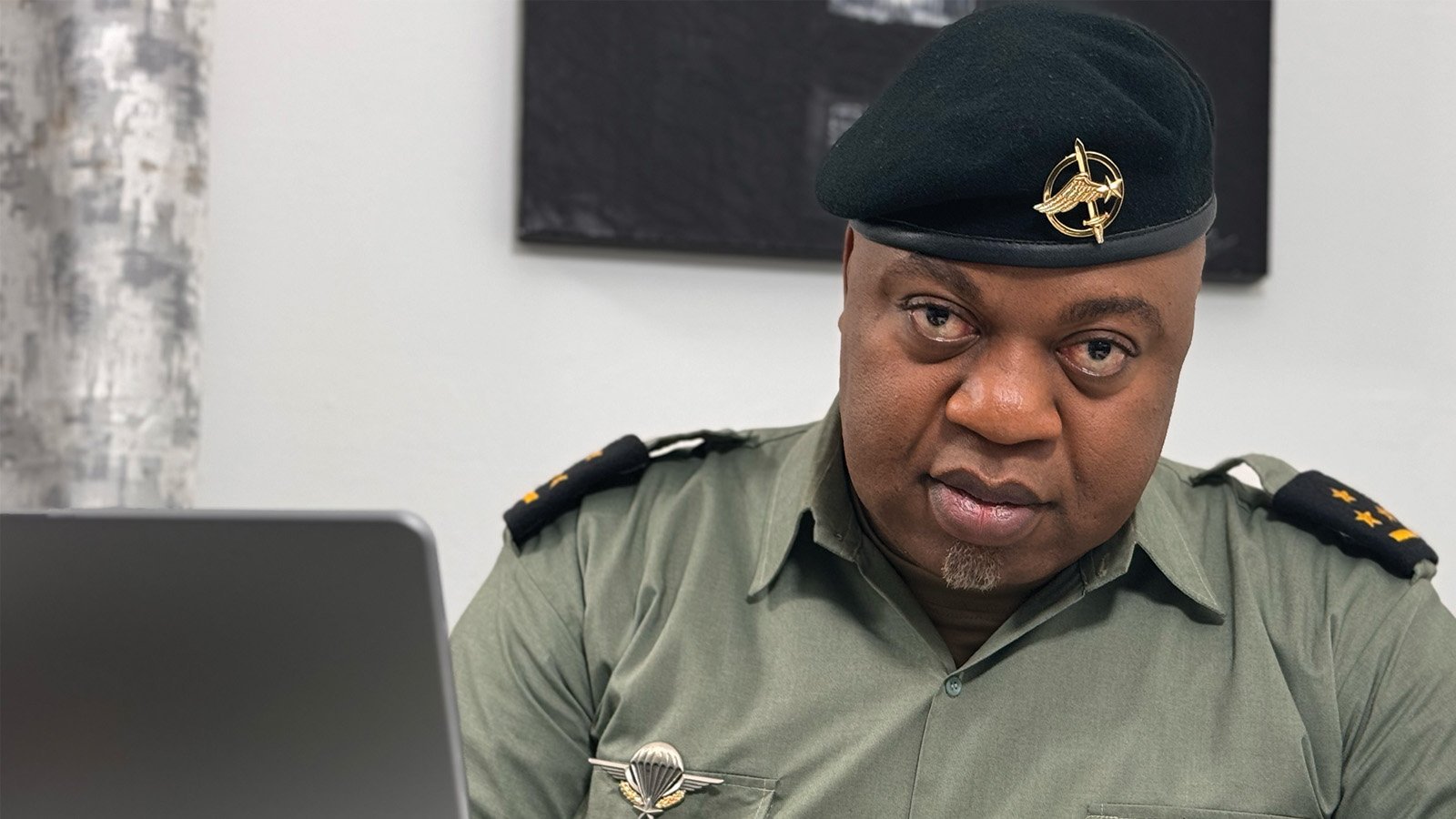
Born Joris Nkombe on 18 March 1977 in Kinshasa, Joshua Nkombe grew up with a father who was an officer in the Zairean army and a mother who ran her own business.
In 1990, at thirteen, he left to continue his education in France.
In 1995, like many children of dignitaries at the time, he began military training with a view to joining the Division spéciale présidentielle, responsible for protecting President Mobutu. The fall of the regime in 1997 cut that path short. He drew a lesson from it that he would never forget: a power that rests on a single man falls with him. He stayed in France and studied management and international trade in Paris.
In 2000, Manda Mobutu brought together within the Rassemblement national populaire (RNP) Congolese from the former regime who opposed Laurent-Désiré Kabila. For Joshua, Manda was an elder brother he had known for a long time. Manda called on him, and Joshua joined the opposition at twenty-three. He then worked with Honoré Ngbanda, President Mobutu's former special security adviser. The father of several of his childhood friends, Ngbanda was a father figure to him.
After the Sun City agreements, he returned to Kinshasa in 2003 with the component of the former Katangese Tigers, to which he had been attached although he is not from Katanga. He rejoined the national army with the rank of colonel. The following year, the death of Manda Mobutu, in Paris, took from him the man who had led him into political life.
The 2006 elections sharply raised tensions in Kinshasa. In March 2007, Jean-Pierre Bemba's security men clashed with the presidential forces, and the fighting left several hundred dead. Soldiers were then arrested for their origins or for the political ties attributed to them.
In 2008, Colonel Nkombe was adviser to Lieutenant General Dieudonné Kayembe, Chief of General Staff of the FARDC, who like him had trained in France, notably at Saint-Cyr. The post did not dispel the distrust of Joseph Kabila's regime towards his background and origins. At the end of the year, warned that his arrest was being prepared, he left Kinshasa via Brazzaville and returned to France.
He then worked as a security adviser and carried out several missions in Africa and Afghanistan.
In 2013, he was arrested in the Comoros and then convicted in the case of the attempted coup against President Ikililou Dhoinine. In detention, he reflected on the state of the Congo and the weakness of its institutions. It was there that the first foundations of the Master Plan took shape. It was there too that he began to use the name Joshua, adopted after a dream, as other Christians choose a name tied to the mission they believe they have received. Joshua is the English form of Josué, the man who, in the Bible, leads his people to the Promised Land.
Pardoned at the end of 2015, he told his family about his new name. Back in Paris, he kept a low profile and went back to his studies, in operational logistics and then in theology at the Institut protestant de théologie.
The arrival of Félix Tshisekedi as president in 2019, the Congo's first peaceful transfer of power, gave him hope again. But at the end of 2021, the M23 took up arms again in the east of the country, with Rwanda's involvement. Joshua then stepped out of his reserve. He brought together Congolese at home and in the diaspora, former soldiers and professionals ready to serve, and founded Force Nationale in 2022. He wrote to the President of the Republic and several authorities proposing that these skills support the country's defence, instead of entrusting that mission to private military companies. When his letters went unanswered, he addressed the head of state publicly in a video. National Force then set itself a new goal: to train the leaders capable of running the country differently, and to prepare for the 2028 election.
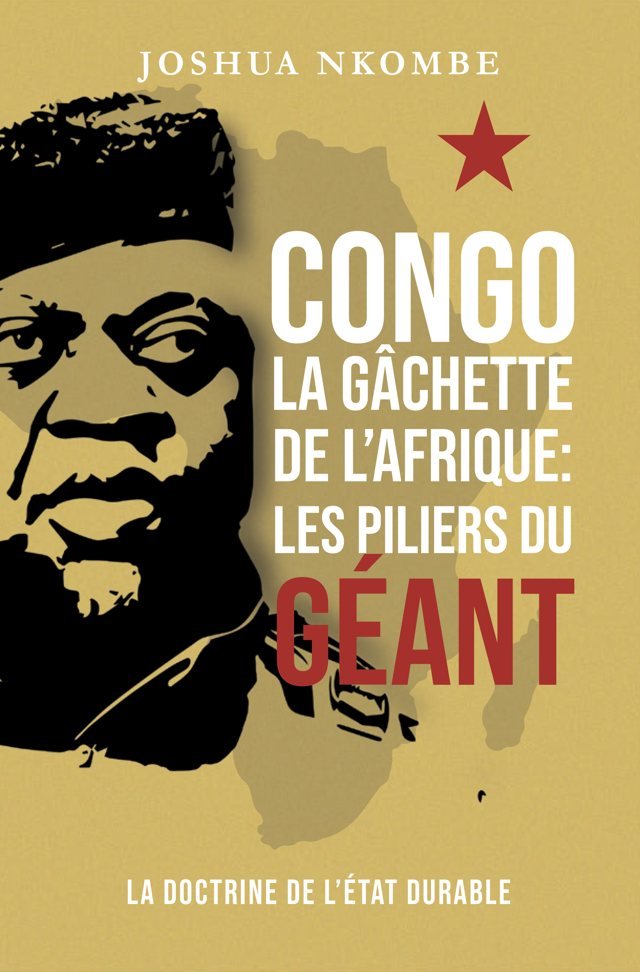
From 2025, he published the four volumes of “Congo, the Trigger of Africa”, the Master Plan begun in detention and developed over ten years. It is this project that he now intends to put before the Congolese people.
"Where others settle for surviving, we must build."Joshua Nkombe
Why I am committed.
I am committed because I refused to accept what many have come to see as normal.
The Congo's resources feed industries far beyond our borders while millions of Congolese live without electricity, stable jobs or accessible public services. Our territory holds a strategic place in Africa, yet the country still struggles to protect its interests and enforce its decisions.
The fact that this situation keeps repeating itself does not make it acceptable.
The problem lies in how the State is organised. Public policies often remain tied to the people who announced them. When a leader leaves, part of the work disappears with him. Responsibilities are poorly defined, results rarely evaluated, and useful skills are left aside.
Changing the faces at the top has not been enough. I want to work on the structure that governs the country.
An institution must know its mission, the resources at its disposal and the person who will answer for its action. Citizens must be able to consult budgets and check results. Public responsibilities must be assigned according to known criteria, with competence at the centre.
For me, sovereignty begins with the capacity to decide and to deliver. It requires contracts that protect the national interest, resources processed in the Congo and a defence able to protect the territory. It must create jobs, fund public services and prepare the next generation.
The Congo has the women and men it needs. They work in our provinces, in businesses, in our institutions and in the diaspora. Many act alone, without a common framework and without access to the responsibilities where their experience would be useful.
Force Nationale was created to bring these skills together around a common direction. The Master Plan gives that direction a content, a method and objectives that citizens will be able to examine.
I know this commitment exposes me. It closes doors and obliges me to answer publicly for my choices. I accept that. The accountability I ask of institutions must also apply to me.
I commit to helping build a State that keeps its direction when governments change, that protects the national interest and that is accountable to its citizens.
My candidacy in the 2028 presidential election will bring this project before the Congolese people. They will be able to read it, debate it and decide whether it deserves their trust.
I am committed so that the Congo regains control of its future.
I will not turn back.
A life of commitment.
Born in Kinshasa
Born Joris Nkombe on 18 March, son of a Zairean army officer and an entrepreneur mother.
Leaving for France
At thirteen, he leaves to continue his education in France.
Military training in France
Trains to join the Division spéciale présidentielle. The fall of the regime in 1997 ends that plan.
Joining the opposition
Joins Manda Mobutu's RNP, then works alongside Honoré Ngbanda.
Rejoining the army
Returns to Kinshasa with the former Katangese Tigers and rejoins the national army as a colonel.
Adviser to the Chief of Staff
Adviser to Lieutenant General Dieudonné Kayembe, Chief of General Staff of the FARDC.
Exile
Threatened with arrest, he leaves Kinshasa via Brazzaville and returns to France.
Detention in the Comoros
Arrested and then convicted in the Comoros, he was pardoned at the end of 2015. It was in prison that he took the name Joshua.
Back to studying
Studies operational logistics, then theology at the Institut protestant de théologie.
Founding of National Force
As the M23 returned, he brought together Congolese at home and in the diaspora, then wrote to the head of state and addressed him publicly in a video.
The collection
Publication of the first volume of “Congo, the Trigger of Africa”.
Today
Publishes the fourth volume and prepares, with National Force, a candidacy for 2028.