FREN
Join
The movement

National Force

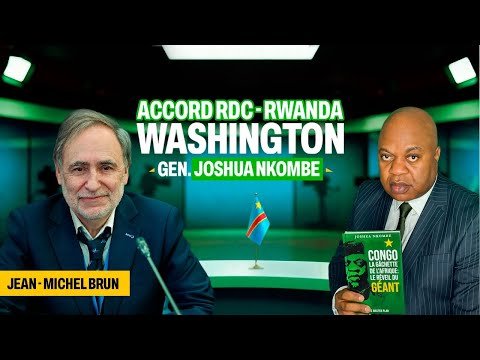
The citizens' movement that identifies, trains and brings together the skills of Congolese people around the world. It carries Joshua Nkombe's candidacy in the 2028 presidential election.

National Force brings together and trains the builders of Congo.
Its first milestone: the 2028 election.

The diagnosis

Why National Force was born.

In 2022, Congolese people trained all over the world offered to serve their country. Nobody answered them.

That silence says a great deal about the state of Congo. The country has resources and talent, but it does not know how to bring them together. Its engineers, doctors, lawyers and former officers each work on their own, often far from home, with no framework to put their experience at the service of the nation.

National Force wants to bring these scattered capabilities together in an organisation that works. It prepares the women and men who will be able, tomorrow, to run a strong and competent State.

National Force is a citizens' movement. It acts openly, within the framework of the Constitution and the laws of the Republic.

Our mission

Identify, train, unite.

Congo's skills exist. National Force brings them together into an organised force serving the nation.

01Identify

A register of Congolese skills

Identify Congolese talent, at home and in the diaspora: former officers and soldiers, engineers, doctors, lawyers, teachers, entrepreneurs.

02Train

Leaders ready to serve

Train and upgrade this talent: discipline, ethics, leadership and command of the Master Plan.

03Unite

An organised network

Connect these scattered forces into a structured network, able to act together to rebuild the country.

The talent bank

The Congo able to rebuild itself already exists.

Every member can declare their field, profession, country and experience. Together, these skills map out Congo's builders.

The talent bank is being built.

The first statistics will be published once 100 members have declared their skills. Be among the first builders.

Declare my skills
Two pillars

Civilian skills and defence expertise.

The civilian pillar

Train the elite that will be the alternative.

Administrators, economists, doctors, engineers, lawyers, teachers, entrepreneurs: National Force identifies and trains the civilian skills of the country and the diaspora.

Its goal: prepare a new generation of leaders with integrity, recruited on merit and trained in the Master Plan, who will be the alternative to today's politicians.

The vision of the Master Plan
The defence pillar

The Defence and Security division.

Many former Congolese officers and soldiers, trained in leading academies and in various theatres of operation, now live in Congo or in the diaspora. The Defence and Security division brings these veterans together with security professionals. They contribute to:

  • a public Defence White Paper;
  • the retraining of veterans;
  • training in republican ethics.
This division is neither a military unit nor an operational force. It makes skills available to the State, should the State decide to call on them within the law. Serving military personnel cannot join the movement, in keeping with the neutrality of the army.
The army, guardian of the Constitution
Our programmes

Prove it before governing.

Nine programmes to prove, starting today, that Congo can be governed differently.

01Train

The National Force Academy

Free, certified online training: the Master Plan, public management, ethics, leadership. The “Builder” certificate opens access to responsibilities within the movement.

02Govern

The government of competence

A team of professionals for each major ministry (health, energy, finance, defence, education), with a plan for the first 100 days.

03Govern

The alternative budget

With every finance bill, we publish our own budget, costed line by line.

04Select

The merit exam

Our future candidates take a public written and oral exam, marked by a partly independent jury. We apply the rule of merit to ourselves first.

05Integrity

The integrity charter

The movement's leaders publish their assets and commit to a charter, with the possibility of being removed.

06Prove

Proof projects

Visible projects funded by the diaspora (solar school, borehole, clinic), with accounts published to the dollar.

07Monitor

The Promise Tracker

Public tracking of the government's commitments and of budget execution, open to all.

08Contribute

The skills pledge

A few days of missions a year, remotely or on site, so the diaspora brings its know-how as well as its financial support.

09Unite

Local circles

Circles in every city, at home and abroad, with open meetings and minutes published online.
The Manifesto

The 9 commitments for Congo.

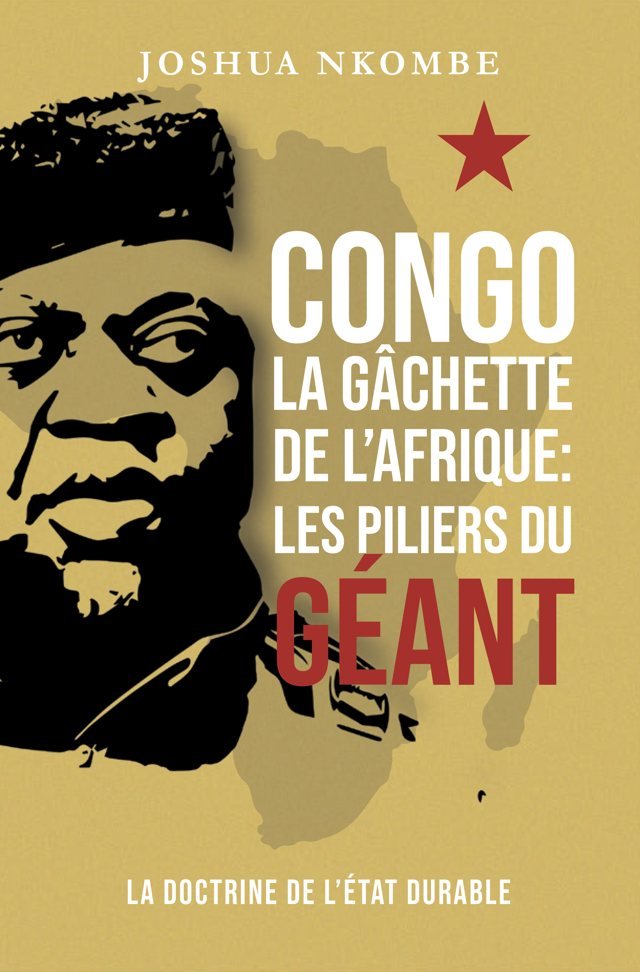
Taken from the National Force Manifesto, “Building a State that lasts” (2026 edition).

01Institutions that last
  • Write the two-term limit into the Constitution, with no possibility of changing it by referendum.
  • Publish an evaluation of every minister each year.
  • Entrust appointments to a National Council for Selection and Merit.
  • Guarantee the independence of the judiciary and protect whistleblowers.

How we measure it: The share of appointments made through the Merit Council and the evaluation of every minister, published every year.

02Sovereign public finances
  • Make all public revenue traceable on a digital platform, and publish mining titles, concessions and contracts.
  • Write into the Constitution an automatic budget rule and an investment floor that no government can lower, drawing on Germany's debt brake and on Norway's rule limiting withdrawals from its oil fund to 3% a year.
  • Separate mining revenue from the current budget: it goes into a DRC 2050 Sovereign Fund, and only the fund's returns pay for infrastructure.
  • Protect future generations: any major borrowing is subject to a stricter approval rule.
  • Guarantee the independence of the Central Bank.

How we measure it: The share of revenue traceable online and the rate at which the investment budget is actually spent, checked by the Court of Audit.

03An economy that processes in Congo
  • Raise local processing of strategic minerals from 10% to 50%, all the way to batteries.
  • Modernise agriculture to reach food self-sufficiency.
  • Open a single digital business window and give start-ups and SMEs three tax-free years.
  • Build a transfer of skills into every foreign partnership.

How we measure it: The share of output processed in the country and the number of jobs created.

04Education and skills
  • Build 5,000 schools and renovate 3,000 by 2030.
  • Make school free for every child.
  • Train 500,000 young people in digital skills and open 500 vocational training centres by 2030.
  • In addition, train 500,000 skilled workers over ten years for mining, energy, agriculture and technology.

How we measure it: Every school built or renovated made public, province by province.

05Energy and infrastructure
  • Relaunch Inga and bring electricity to every province, with solar mini-grids and micro-dams.
  • Make electricity free for schools and health centres, and cheap for households.
  • Modernise the Banana-Matadi-Kinshasa corridor.
  • Audit every project and publish its contracts.

How we measure it: The electrification rate, published every year.

06A republican army, guardian of the constitutional order
  • Three functions, and only three: defend the country's territorial integrity, protect the constitutional order as a last resort, and secure borders, infrastructure and strategic resources.
  • The monopoly of force belongs to the nation, not to one man, a clan or a faction. The army can never be deployed to keep a government in power against a lawful opposition. Those who order it and those who carry it out answer for it in court.
  • The army never acts on its own initiative. To protect the constitutional order, three conditions must be met at the same time: the Constitutional Court establishes the violation, Parliament formally finds it can no longer function normally, and the High Council for Military Oversight confirms. If any one is missing, no deployment is allowed.
  • A professional, unified and apolitical army: recruitment by competitive exam, mixed units, no officer commanding a unit in his home region, no serving soldier in a political party.
  • A High Council for Military Oversight in three equal parts: officers chosen by their peers, lawyers chosen by the Constitutional Court, and civil society members chosen by Parliament.
  • Regular pay, a minimum budget guaranteed by the Constitution, and no commercial activity for the army.

How we measure it: The share of soldiers paid on time, audited military spending and the sanctions imposed, presented to Parliament every year.

07A diplomacy that serves Congo
  • Choose our alliances according to Congo's interests.
  • Submit every strategic agreement with a foreign power to Parliament for ratification, and publish it in full.
  • Demand the withdrawal of Rwandan forces and an end to their support for the M23, as the UN Security Council requires.
  • Make every partnership a transfer of technology and skills.

How we measure it: The number of agreements published and ratified by Parliament, and the skills transfers secured in each partnership.

08Authenticity, chosen and not imposed
  • Teach Lingala, Swahili, Kikongo and Tshiluba at school, with translated textbooks and trained teachers, so that every child begins school thinking in their own language.
  • Teach our history, written by Congolese historians, from the Kingdom of Kongo to independence and up to today.
  • Protect our heritage and support Congolese music, arts, fashion and film, for a living culture that travels abroad.
  • No obligation on anyone's name, dress or faith. The nation's major symbolic choices will be decided by consulting the people.

How we measure it: The place of national languages in the school curriculum, published every year.

09Eleven provinces and the diaspora
  • Eleven provinces instead of twenty-six, redrawn according to geographic coherence, economic viability and the capacity to govern. The boundaries will be set through a national consultation of the people concerned, then by a constitutional reform put to the people.
  • A Parliament rooted in the territories: an Assembly of Territories of 290 members, one man and one woman in each of the 145 territories, elected locally and not chosen by the parties. The diaspora, recognised as the twelfth region, sits in the Senate of the Regions and the Diaspora.
  • Governors appointed on merit for a first term, then elected by the provincial assemblies. None governs their home province, to shield them from family and community pressure. Rotation every five years.
  • The 145 territories as the foundation of State action, each with an administrator publicly evaluated every year.

How we measure it: A public evaluation of every province and every territory, every year.

Your data

Your commitment is protected.

  • Only what is necessary. Skills information is optional.
  • No name ever published. Only anonymous statistics are made public, and only once there are 100 members.
  • Restricted access. Your data is only accessed by the movement's coordination team.
  • Your rights. You can ask at any time to access, correct or delete your data.
The time of builders

We recruit builders.

Former officer, former soldier, engineer, doctor, teacher, entrepreneur: wherever you are in the world, your skills count.